A few words about wing servicing
Over the life of a paraglider wing, material may shrink or rip, risers fray and wear and lines shrink or stretch. It’s essential that you service your glider regularly to ensure it is safe and performing at it’s best.
A BTC Standard Service provides a general overview of the condition of your glider, whilst a BTC Full Trim Service includes all elements of the standard service as well as digitally measuring every line and adjusting the trim of the gilder as needed to ensure maximum safety and performance in the air.
We suggest a Full Trim Service after about 40 hours of flying a new glider and then every two to three years after that with a Standard Service in between.
Service Options
Choose from a Standard Service or Full Trim Service.
Standard Service:
Full Trim Service:
Trim changes are charged at £30.00 an hour (usually completed within an hour)
Costs
Standard Service:
|
Speed wing / parakite |
£90 |
|
Standard paraglider |
£100 |
|
Tandem paraglider |
£110 |
Full Trim Service:
|
Speed wing / parakite |
£165 |
|
Standard paraglider |
£185 |
|
Tandem paraglider |
£195 |
Why Choose Beyond the Clouds?
We are proud of our personal approach to paraglider servicing. If we find damage, we will contact you to discuss options with you. We aim to turn all wings around within 7 days, and we price our services fairly.
Scott was amazing from start to finish. My wing now flies 15% faster, and I fly further every time I fly!
Anonymous Paraglider
More detail about Wing Servicing
Visual Wing Inspection
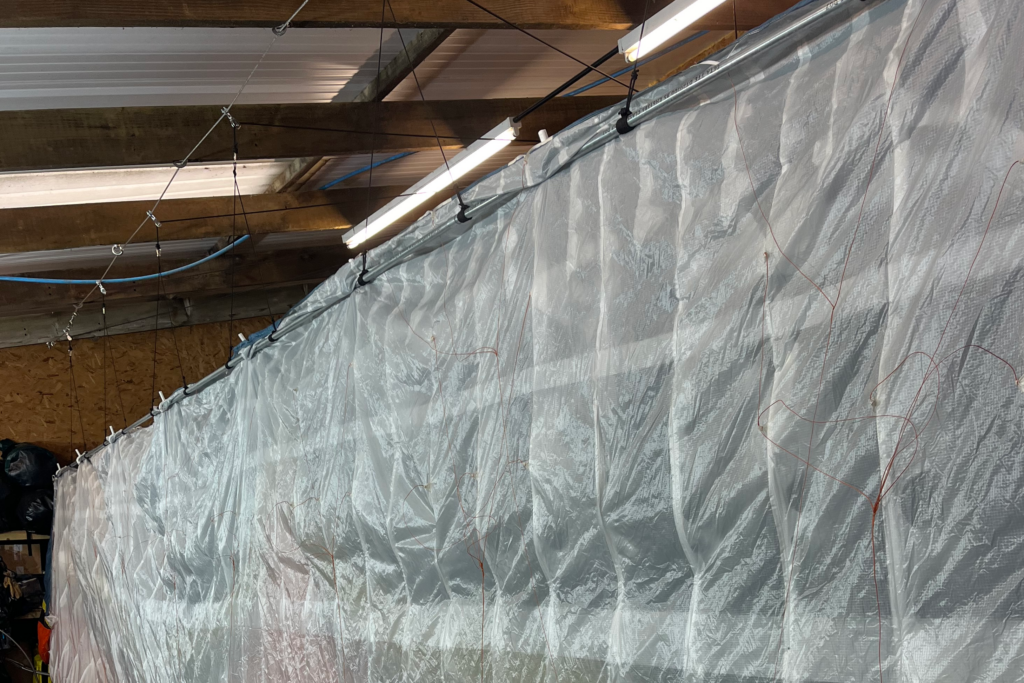
Most of us think we have a good idea about the general state of our kit, but the truth is that normally we only see it from several metres away, or when we are packing the wing away – it is easy to miss any holes, tears or abrasion damage.
We undertake a full cell-by-cell inspection of wing surfaces, identifying any issues with the material and providing a condition report.
If any damage is found, we will contact you to discuss the repair options available.
Riser Inspection
Riser inspection covers all aspects of the attachment point between your harness and your wing.
This includes general condition, webbing stitching inspection, mallion gate checks, and ensuring lines have o-rings where neccessary.
Line Inspection

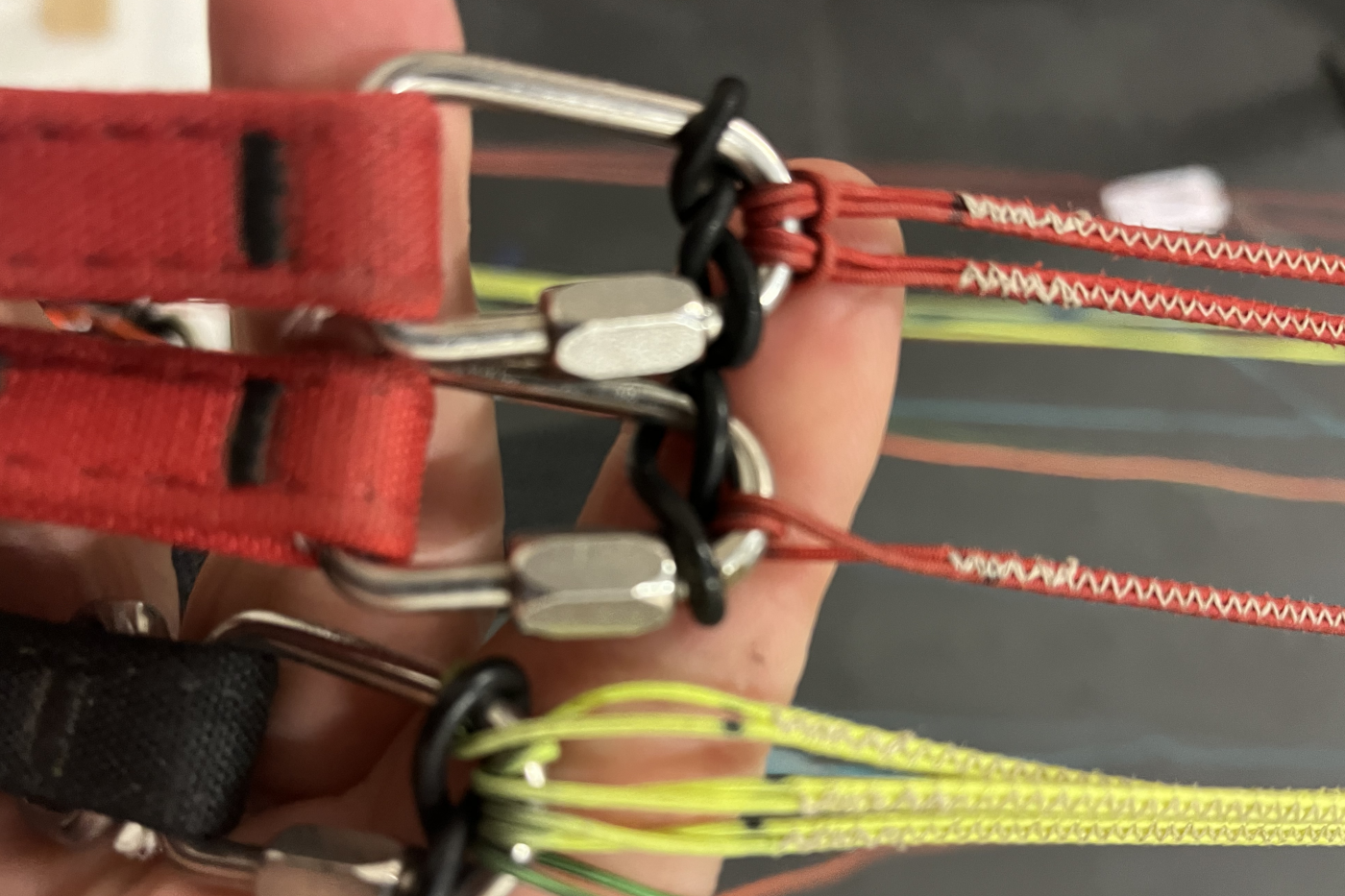
Compression knots, line wear, abrasion and sheaf damage all happen regularly when we ground handle and fly our wings.
A careful line inspection allows us to identify all the nicks in protective sheaves, brake line twists, and friction knots, and field replacements that may be affecting the performance of your wing.
Fabric Porosity Test
The Paragliding Manufacturers Association (PMA) guidelines defines porosity as one of the key safety metrics.
We use a Porozit porosity tester – we believe this is one of the most accurate porosity devices on the market.
Different manufacturers have their own definitions of what constitutes a safe wing – we use a simple traffic light system to make it simple for pilots to understand how much life there is left in the fabric of their paraglider.

Material Strength Test

The fabric tear strength test may be the best indicator of the state of the material of a paraglider – this is an important measure of how likely your wing is to survive a violent reinflation after a big collapse.
Most newish wings pass this test easily, but as fabric breaks down under UV and mechanical strain, we must pay attention to the tear resistance.
Symmetry Check
We make a symmetry check for all Standard Services. It’s not as comprehensive as a full line trim, but it gives us a good idea of the trim state of the wing. (We can usually tell if you habitually thermal left or right, too!).
Occasionally following a symmetry check we advise a customer that a full trim is in order.
Line Strength Test
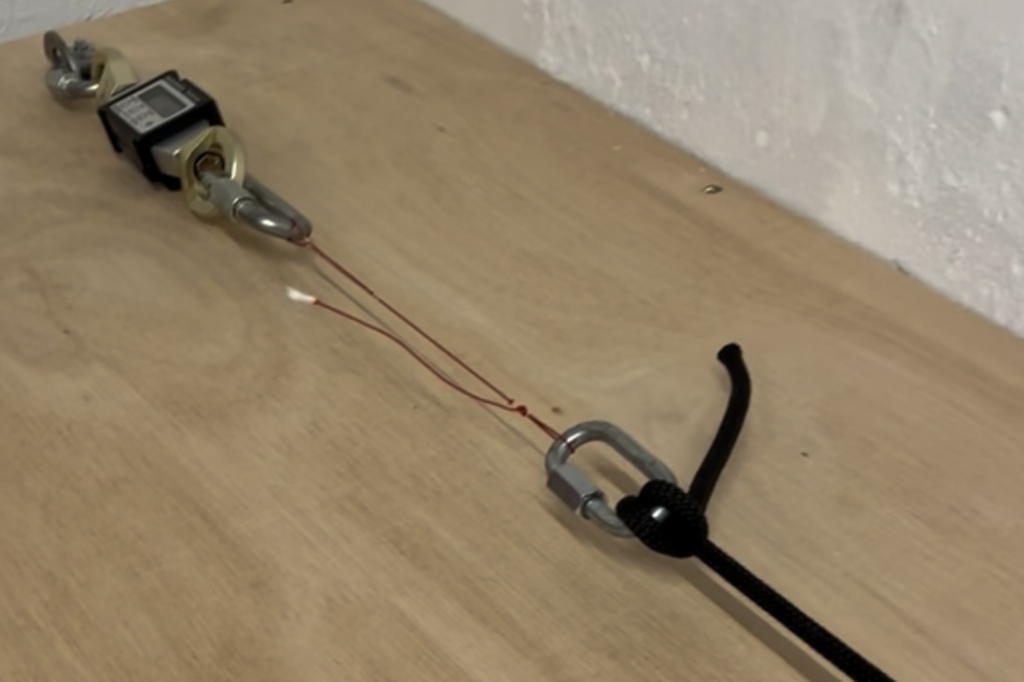
The Paragliding Manufacturers Association (PMA) recommends line strength testing lines from each cascade. This becomes expensive as we have to replace each line – we usually test and replace a single line. (We will undertake a full PMA strength test if requested).
This testing is done using a highly accurate load testing cell, which allows us to measure the exact load a line took before it failed.
Line Replacement
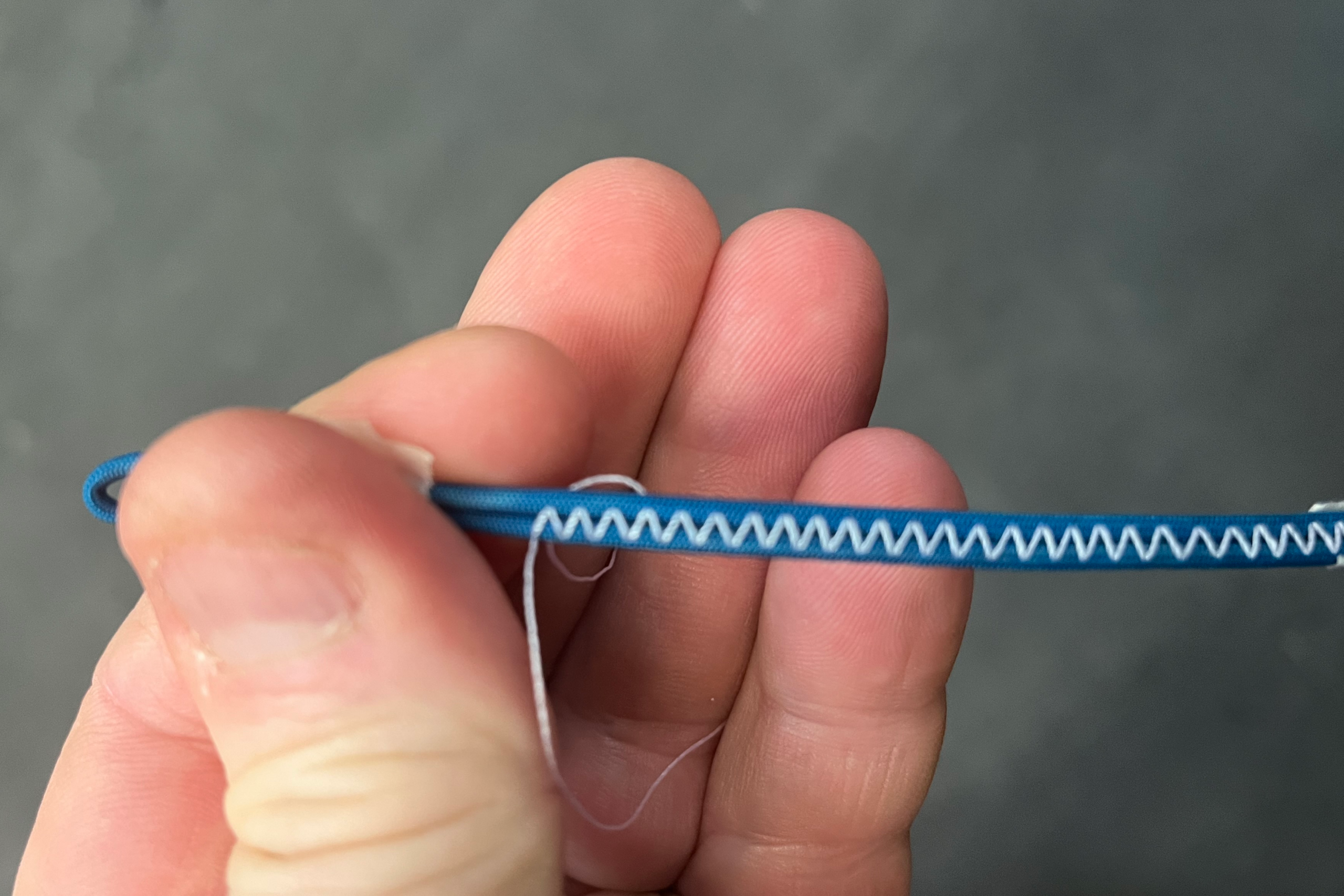
Unfortunately line strength testing requires us to test to destruction, so we sew a new line of the correct length and replace it on your wing.
The new line is sewn after the wing is trimmed, so we get a perfect match for your newly trimmed glider.
Digital Line Trimming

Most of us think of wing trimming as a dark art, and there are many subtleties to the job. However, at it’s core, this is simply the process of taking highly accurate measurements of every line on your wing, and then adjusting the lines using a variety of techniques, to bring the wing back into trim.
We provide a trim measurements spreadsheet, showing the length of the lines when the wing was initially measured, along with the resulting profile and measurements when the wing was re-measured following trimming.
Written Report
We provide an easy to understand pdf which gives you (and any potential buyer of your glider) a record of it’s condition when we serviced it.